

Long White Gypsy uses affiliate links and is a member of the Amazon Services LLC Associates Program. If you make a purchase using one of these links, I may receive a small commission at no extra cost to you. See my Privacy Policy for more information.
Fancy soaking your feet in a natural hot spring at the end of a full-day hike? The Tarawera Trail delivers that and more.
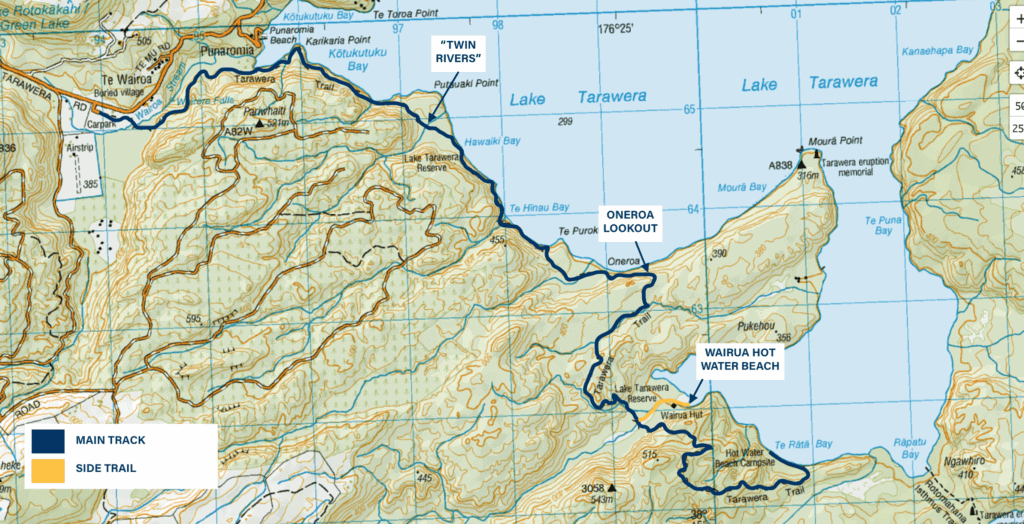
This 15 km one-way track (which can be walked in either direction – although read on for more about which direction is best!) weaves through lush bush and volcanically moulded terrain, ending up at the geothermally heated Hot Water Beach on the shores of Lake Tarawera.
Located just outside Rotorua in the Central North Island, the Tarawera Trail walk is packed with scenery, a good challenge, and the odd logistical twist.
In this Tarawera Trail guide, I’ll take you through everything you need to know to plan it right—plus what not to do if you fancy finding those elusive hot pools mid-hike.
Track Notes for the Tarawera Trail
| DISTANCE | 15 kilometres (9.3 miles) – one way |
| TIME | 4 – 6 hours – one way |
| DOGS | Not permitted |
| BIKES | Not permitted |
| LOCATION | Lake Tarawera, Rotorua |
| TRACK GRADE | Advanced |
| TOILETS | Long-drops at Tarawera Trail car park, Wairua Stream and Hot Water Beach campsite. |
| WATER | A few streams to fill up at along the way, make sure to treat before drinking. Carry at least 2L per person. |
| PHONE RECEPTION | Pretty good all the way. |
| TRANSPORT | You can self-drive to Lake Tarawera with a private car then water taxi to/from Hot Water Beach. Shuttle bus transfers also available for water taxi users to/from Tarawera Landing from the official carpark. |
| HAZARDS | One (small) unbridged water crossing, geothermally heated hot water (make sure to follow all signage). |
| SPECIAL GEAR | Trekking poles will be an advantage (especially for the small unbridged river crossing), swimming gear and a towel for a soak in the hot pools at the end of your hike. |
Things to Know about the Tarawera Trail.
The Tarawera Trail is a well-formed, 15 km one-way track from the Tarawera Trail carpark (near the Buried Village on Tarawera Road in the Rotorua Lakes region) to Hot Water Beach on the shores of Lake Tarawera.
The trail winds through lush native bush, across volcanic terrain, and past some truly stunning lookout points. It’s not a loop trail (meaning you start and finish in different places), so you’ll need to plan your transport in advance.
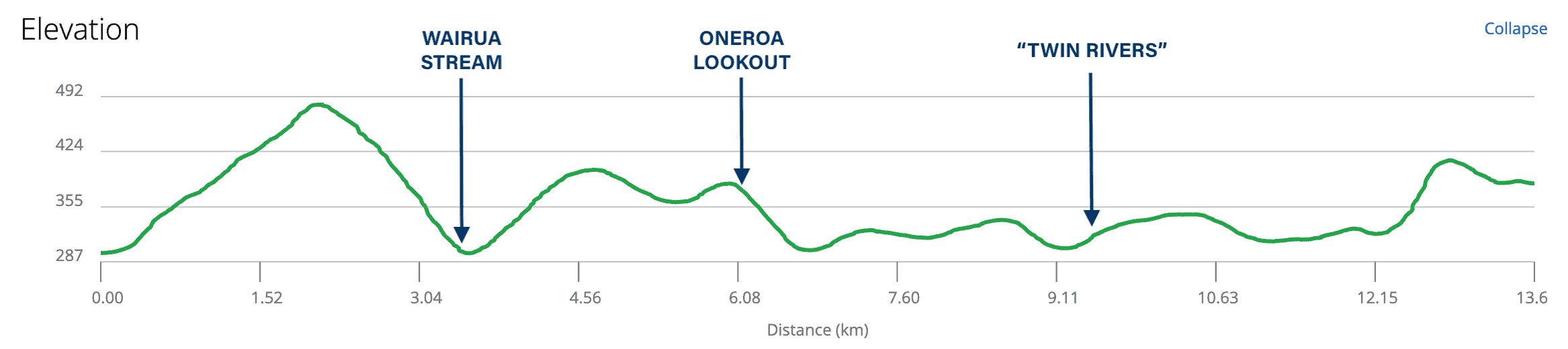
You can hike the track in either direction, and unless you’re a very fit walker that will be enough! The track is easiest to walk in the direction from the carpark to Hot Water Beach (see more on this below). This way, you’ll be walking downhill almost the entire way.
One-way walkers can either book a campsite at the popular Hot Water Beach campsite, or make use of the water taxi service to transport them back to The Landing. Make sure to check the water taxi times and leave yourself plenty of time to get there! There’s also a shuttle bus available between the car park and The Landing.
How to Get There – Tarawera Trail Directions.
From Rotorua, take Tarawera Road towards Tikitapu / Blue Lake. Carry on past Lake Rotokakahi / Green Lake a little way until you see the car park signposted on your right. If you reach Buried Village, you’ve gone slightly too far. You’ll find the entrance to the trail just past the shelter at the carpark.
If you’re starting your walk from Hot Water Beach (as Mum & I did on our first trip) head further along the road to The Landing first to drop off your passengers, then head back up the road to park your car at the trail carpark before collecting your pre-booked shuttle (included with your water taxi tickets) back to the jetty.
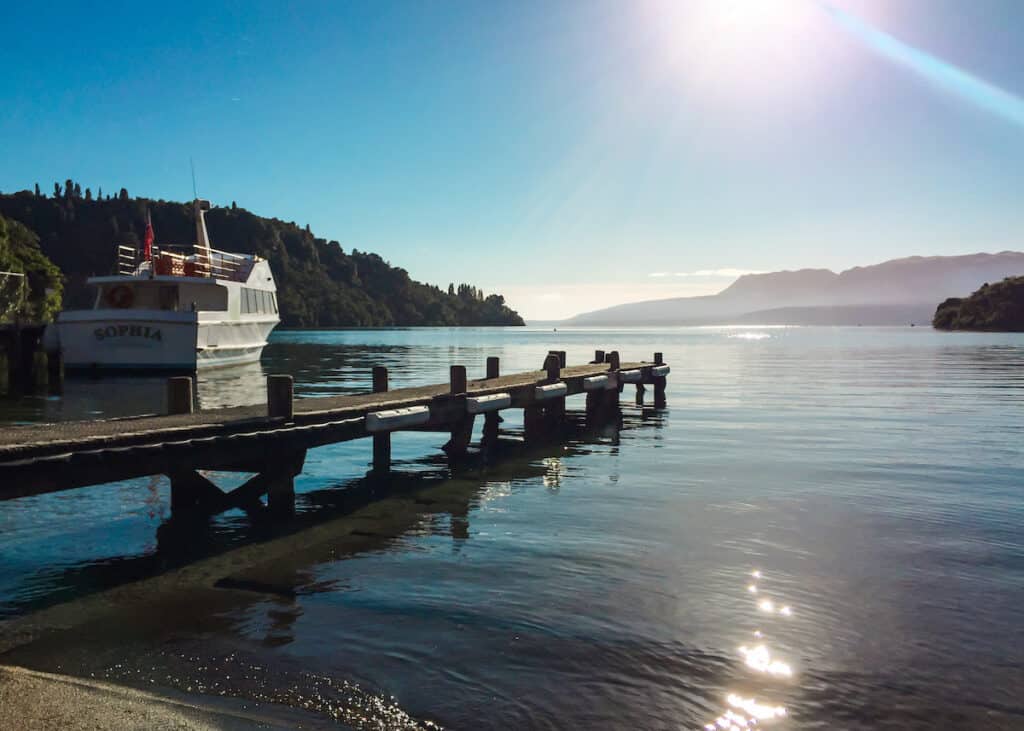
The drive to Lake Tarawera from Rotorua is beautiful. The region can often be blanketed in fog or low cloud, and even on a rainy day is spectacular. But if you’re lucky enough to score a crisp, blue-sky day, it’s hard to beat.
Just be prepared for the sulphuric stench that greets you in Rotorua on your arrival!
Track Grade & Fitness – Tarawera Trail Difficulty.
The trail is graded as an Advanced trail, so don’t underestimate it. Although the track is well-formed, the terrain is hilly and rough in places. Expect constant undulations, a few steep climbs, and uneven footing in places. There is even one un-bridged river crossing to complete at Wairua Stream.
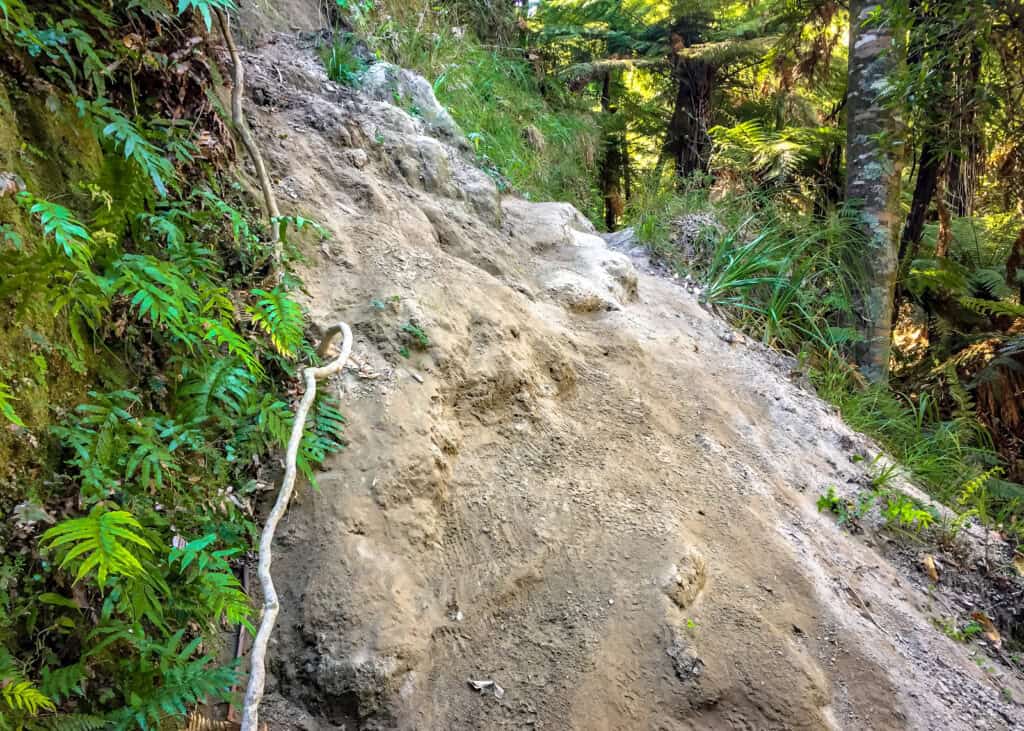
Regardless, the distance alone means you need a moderate level of fitness, and ideally some trail stamina to complete this hike. It’s not too technical, but it is relentlessly undulating. If you’re not used to hiking 5+ hours in a day, this one might stretch you.
Which direction should you walk the Tarawera Trail?
There is an easy (right) and a difficult (wrong) way / direction to walk this track.
The easy direction is to walk from the carpark to Hot Water Beach. Mum and I walked in this direction on our second visit to this track (to prove a point), and it is more aligned with the 5-6 hour official DOC time estimate as you’re walking in a general downhill direction. This leaves plenty of time for a soak at the beach before catching the water taxi return to The Landing.
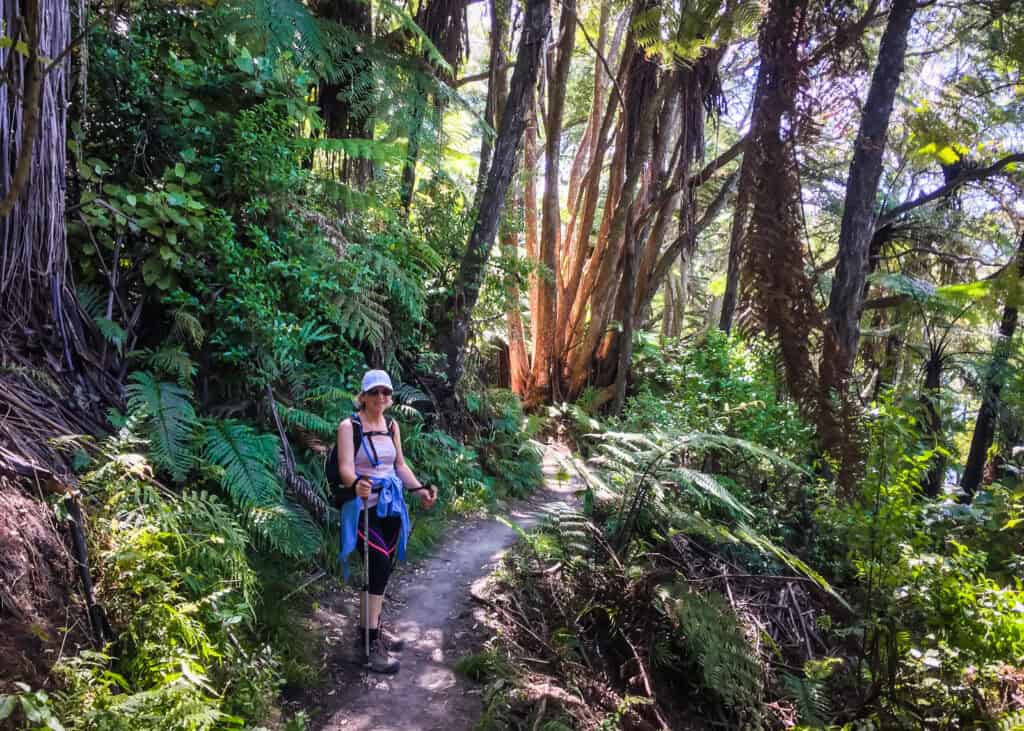
The difficult direction is to walk from Hot Water Beach to the carpark. This is the direction Mum and I first walked the trail in, and it was a mistake! In this direction you’re walking uphill almost all the time. It took us over 7 hours to walk the trail! Although this included a bush detour on a (failed) side-mission to find the elusive hot pools at Wairua Stream.
Tarawera Trail Guide – Facilities.
Toilets
Toilets are in all the usual locations along the track – namely the start, end and roughly in the middle. You’ll find some basic long-drop style toilets at Hot Water Beach and at the Wairua Stream crossing. Other than that, toilets can only be found at the Tarawera Trail car park.
Hot Water Beach Camping
There’s a DOC campground at Hot Water Beach, which is incredibly popular (especially over the busy summer months) and must be booked in advance. Book online here.
Transport To/From The Trailheads
- Tarawera Trail Water taxi: Operates from The Landing. Pre-booking is essential.
- Shuttle: Available between trailhead and The Landing.
Food & Water.
Because this is a volcanic environment, no potable water is available along the track, so bring at least 1-2 litres of your own water with you. Stream or lake water can contain background levels of arsenic.
We brought lunch, snacks, and heaps of water. And we needed all of it. There are long stretches with no access to streams or refill spots.
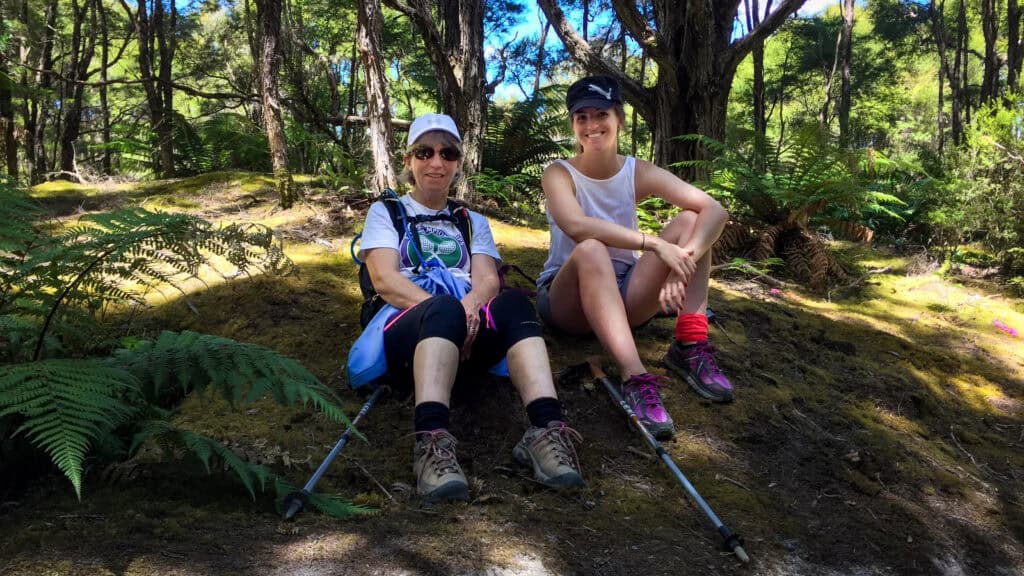
Lunch at Te Wairua was a much-needed morale boost, although bear in mind this is not the half way point of the trail (Oneroa Lookout is much closer to half-way).
Make sure you:
- Bring at least 1-2L of water per person
- Bring high-energy snacks: scroggin, trail mix, chocolate, muesli bars
- Reward yourself with chocolate when spirits are low (seriously, it’s a lifesaver)
Seasonal Variations.
Autumn and early winter can offer perfect hiking weather: crisp air, bright sun, and fewer bugs. But fog and frost can make morning driving sketchy at this time of year in this area, so be prepared for that on your way to the trail.
Mum and I lucked out with good weather on both our trips, but the trail can become slippery and muddy after rain, especially in shaded gullies and clay-based sections.
Be mindful of events: Our first attempt was cancelled due to the Tarawera Ultramarathon (which typically occurs in February each year). The trail and water taxi service usually are closed on race day, so make sure you ring ahead and check.
Tarawera Trail Guide – Camping at Hot Water Beach.
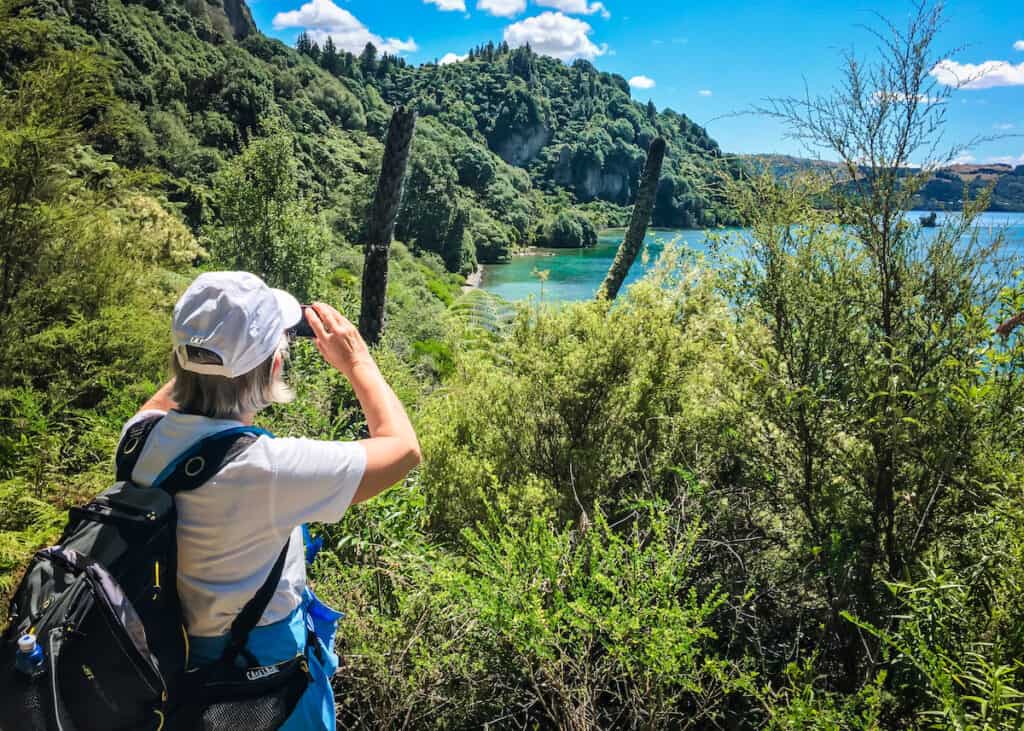
One of the best things about hiking the Tarawera Trail is the opportunity to also experience the incredibly popular Hot Water Beach.
This little beach on the shores of Lake Tarawera is accessible only by foot and water taxi – which makes it pretty special. There aren’t many places in the world where you can end a hike with a geothermal soak right beside your tent!
The shoreline is thermally active, fed by natural geothermal vents that heat the water at the edge of the lake. You can quite literally soak your feet in a warm pool while gazing out across Lake Tarawera!
To make the most of it, make sure to start early, pack your swimming gear and book your water taxi for later in the afternoon so you have plenty of time to enjoy!
The lakefront Hot Water Beach camping is hugely popular, and if you have the opportunity I highly recommend spending a night here. You’ll need to book early via the DOC website – in summer, the campsite books out fast!
The geothermal activity here is a direct result of the area’s explosive volcanic history. Mt Tarawera erupted in 1886 in one of New Zealand’s deadliest eruptions, destroying nearby villages and obliterating the famous Pink and White Terraces—once considered the eighth wonder of the natural world. The lake and surrounding area are part of that dramatic legacy, and the presence of Hot Water Beach is a reminder that Tarawera still sleeps, but hasn’t gone cold.
Tips for enjoying Hot Water Beach:
- Arrive early or stay late if you want as much peace and quiet as possible. Day-hikers and campers pass through frequently.
- Bring swimming gear and a towel—and if you can’t, even a quick soak of your tired feet in the warm waters will leave you feeling refreshed.
- Be respectful of others camping nearby. Pack out all your rubbish, use the nearby toilets and keep noise to a minimum (especially if visiting at night).
- Stay on designated paths. The ground around geothermal areas can be hot and unstable. Make sure to follow all marked signage and test the water temperature before going all-in.
Tarawera Trail Guide – the Route.
I have hiked the Tarawera Trail on two occasions, once from each direction.
On my first trip, myself and Mum decided to catch the water taxi to Hot Water Beach and hike back to the carpark. This seemed sensible at the time as it gave us the freedom to walk at our own pace, without stressing about needing to catch a boat at a certain time from the other end.
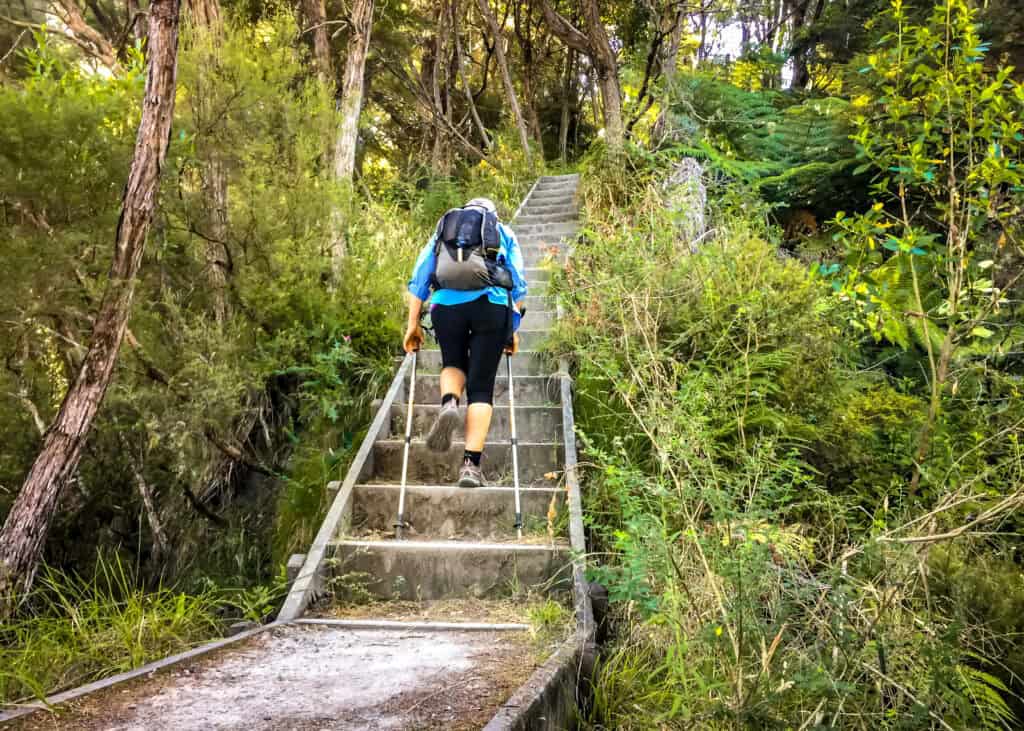
In this direction, the trail begins with a solid uphill, and because of the topography you’ll actually be walking steadily (and in some cases not so steadily) uphill all the way back to the carpark (spoiler alert: it took us 7 hours!).
A reasonable level of fitness is required for this trail regardless of which direction you walk, as it undulates quite a lot along its full length. Although this is less noticeable if walking from the carpark to Hot Water Beach.
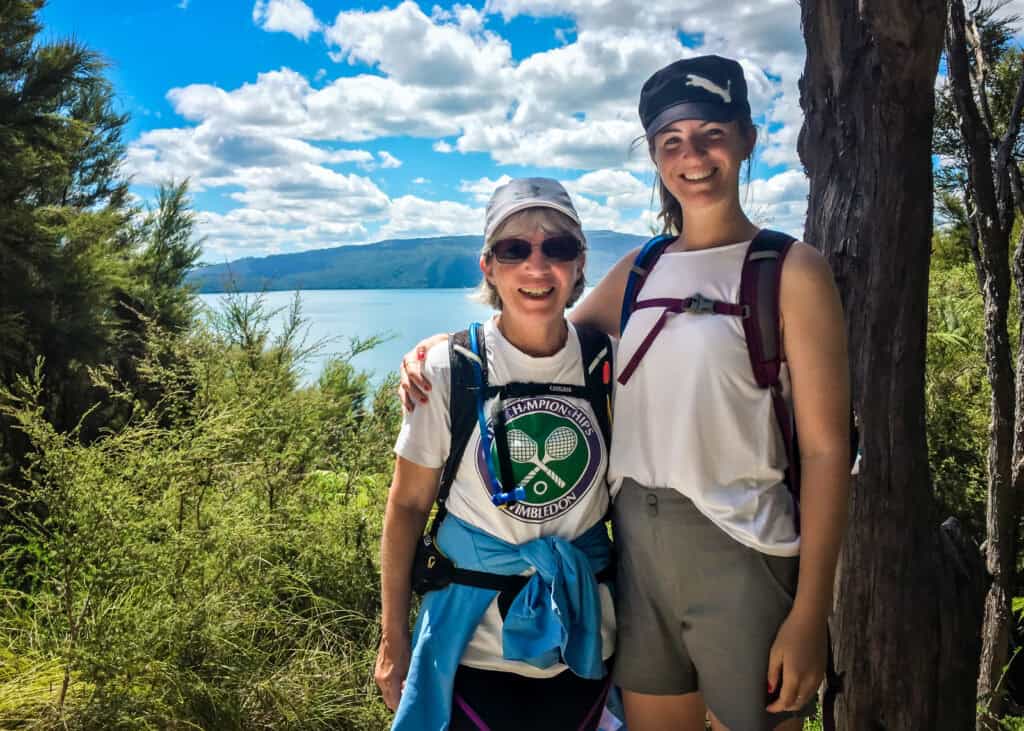
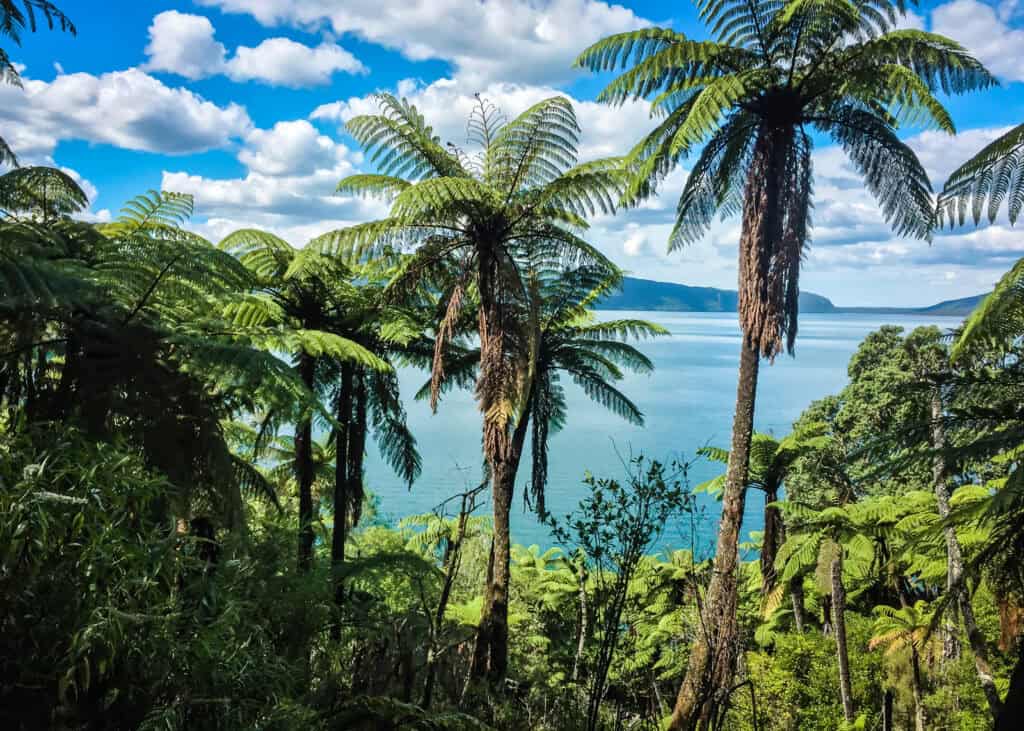
That being said, the bush is beautiful, the track is very well-marked, and the views across the lake pop in and out along the way, so there’s plenty to distract you from the physical exertion!
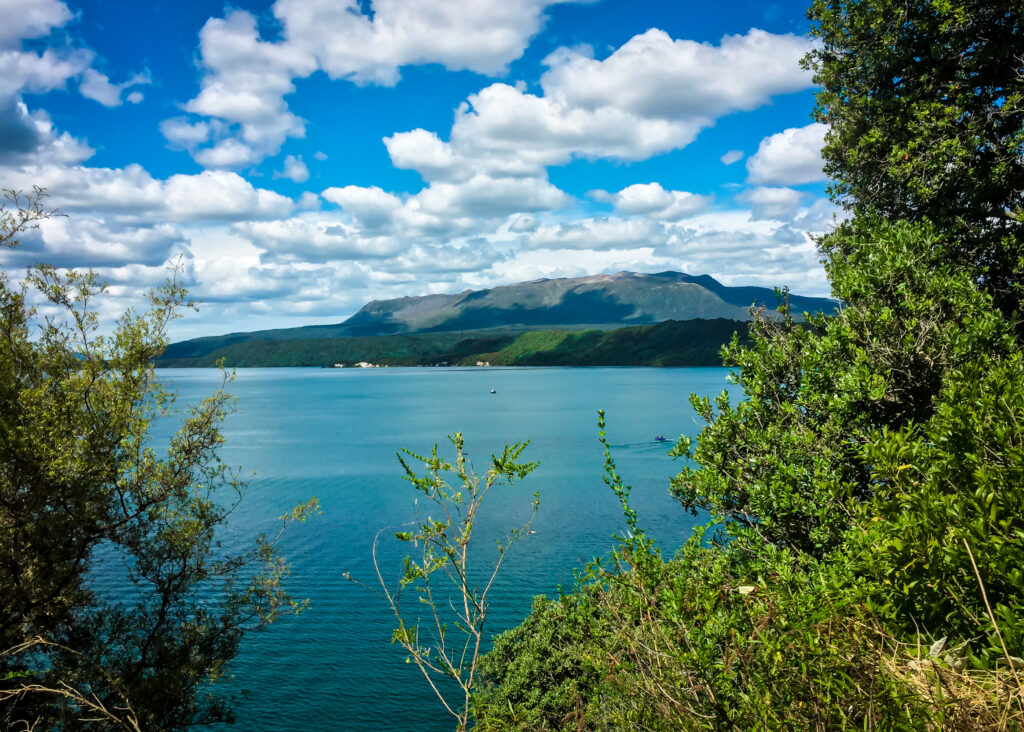
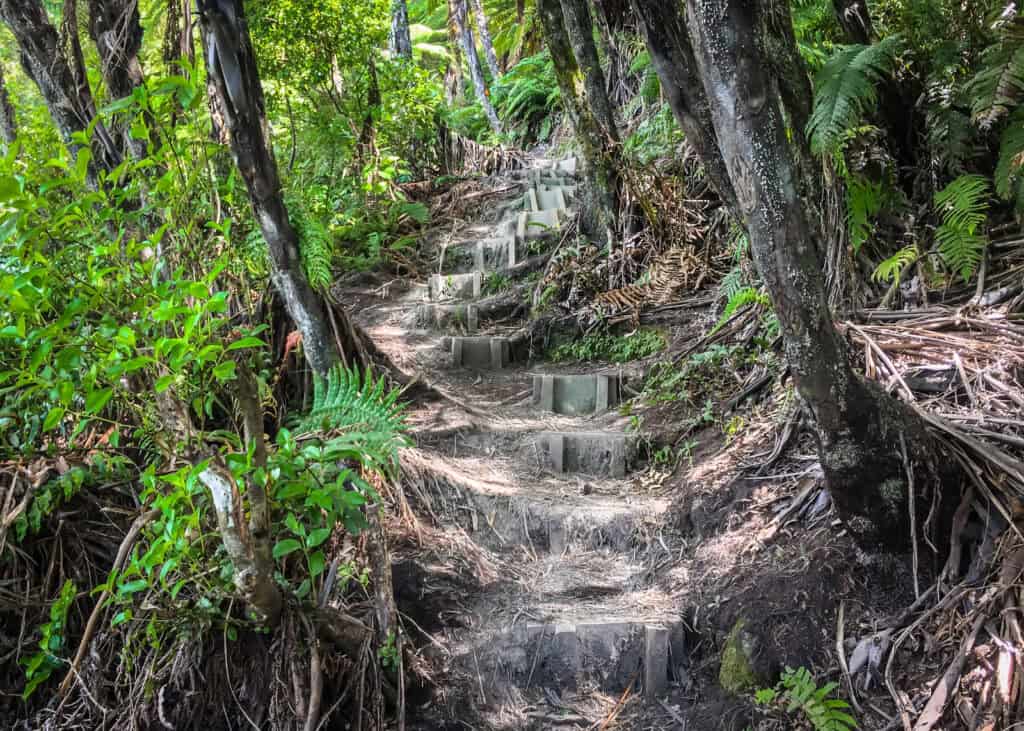
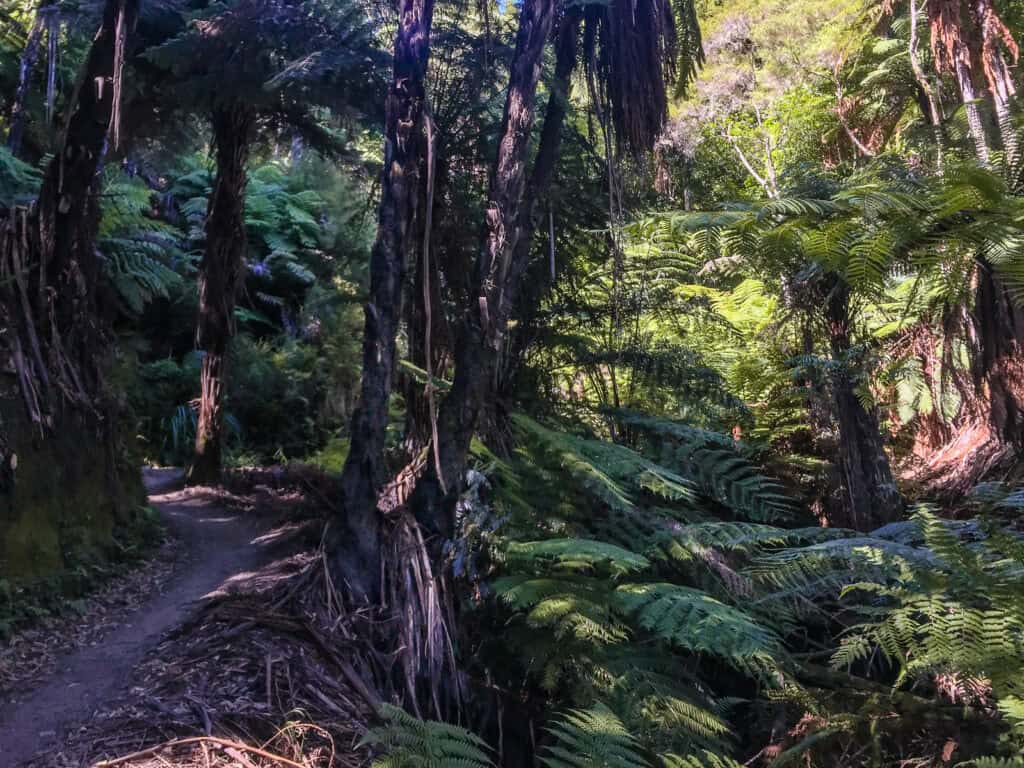
The track is well benched (wide enough for two people to pass) and maintained the whole way. Wild weather can sometimes cause slips and treefall at various points, so it’s a great idea to check the DOC website before you go for any recent alerts (and to make sure the track isn’t closed).
There are a few steep climbs with steps, some of them hewn into the track surface like is shown in the picture above, some of them in a more typical ‘staircase’ style.
When we walked the track the first time, the bridge at Wairua Stream had been washed out, so we had to cross the river in bare feet. By the time we went back, the bridge had been fixed, but I guess beware that the bridge might ocassionally get taken out by bad weather.
The trail is cool and shaded in the summer, as it winds its way through native bush. Only the end of the track which is closest to the carpark is a bit more exposed—bring plenty of sunscreen in summer and a rain jacket in winter.
The track can get boggy and muddy in places, especially in winter and the shoulder seasons and especially after heavy rain. Make sure you are prepared for this if hiking in these conditions.
Hikers walking in either direction will probably find a set of trekking poles very helpful on this track due to the terrain and ground conditions.
Wairua Stream Hot Pools (Side Trail)
If you’re like me, you might have read or heard somewhere (reasonably obscurely) about a second set of ‘hidden’ hot pools along the Tarawera Trail.
I’m not sure where I first came across this knowledge, but on the water taxi with us to Hot Water Beach the first time around, I overheard the captain giving directions to a couple of other hikers on how to get to the pools.
The long and the short of it is that there is a small side-trail just after the Wairua Stream bridge (if hiking from Hot Water Beach) which you can take to get down to Wairua Hut at the lake edge, shortly after which the second set of hot pools can be found.
Be aware though, if you’re interested in venturing to these pools:
- The track to the hot pools is not signposted or marked.
- The track itself is narrow and not easy to follow. There are no trail markers along its length.
- It can take 20-30 mins to get to the hut and hot pools from the main trail, so it’s a reasonable side trip.
- You can get the water taxi to pick you up from the lake edge by the hot pools instead of walking back along the track. You’ll need to enquire personally with them for this service.
Tarawera Trail Guide FAQs.
How Long is the Tarawera Trail?
The trail is 15 km one-way. Most people take 4–6 hours, depending on pace, stops, and weather. We took 7 hours from go to woah, because of the direction we walked (more elevation) and also some time spent looking for the hot pools en route.
What is the Tarawera Trail Difficulty?
The Tarawera Trail is rated easy to intermediate, but don’t be fooled—it’s a solid workout! The track is well-maintained but hilly and undulating. You’ll need a moderate level of fitness and the stamina for 4–6+ hours of walking, depending on your pace and detours.
Can You Walk Up Mt Tarawera?
Yes—you can do the Mt Tarawera summit hike but only with a guided tour. Mt Tarawera sits on private land, and access is restricted to private tours. The mountain is not accessible from the Tarawera Trail. Kaitiaki Adventures runs a regular guided Mount Tarawera crater walk to the summit if you’re interested in checking that out.
Is Tarawera Active?
Yes, Mt Tarawera is considered active but dormant. Its last major eruption was in 1886, and while it hasn’t erupted since, it’s still geothermally active—hence the hot springs and thermal features around the area.
Final Thoughts.
The Tarawera Trail is beautiful, unique, but (in my opinion) harder than it looks on paper. It’s a test of patience, stamina, and even navigation if you’re not careful.
But it’s also one of those hikes you finish exhausted but proud.
If you’re mentally prepared for a long day and come armed with snacks, water, and a bit of resilience, you’ll have a great time. Just don’t rely on signs for side trips. And maybe download a topo map.
Oh, and bring chocolate. Always bring chocolate.
